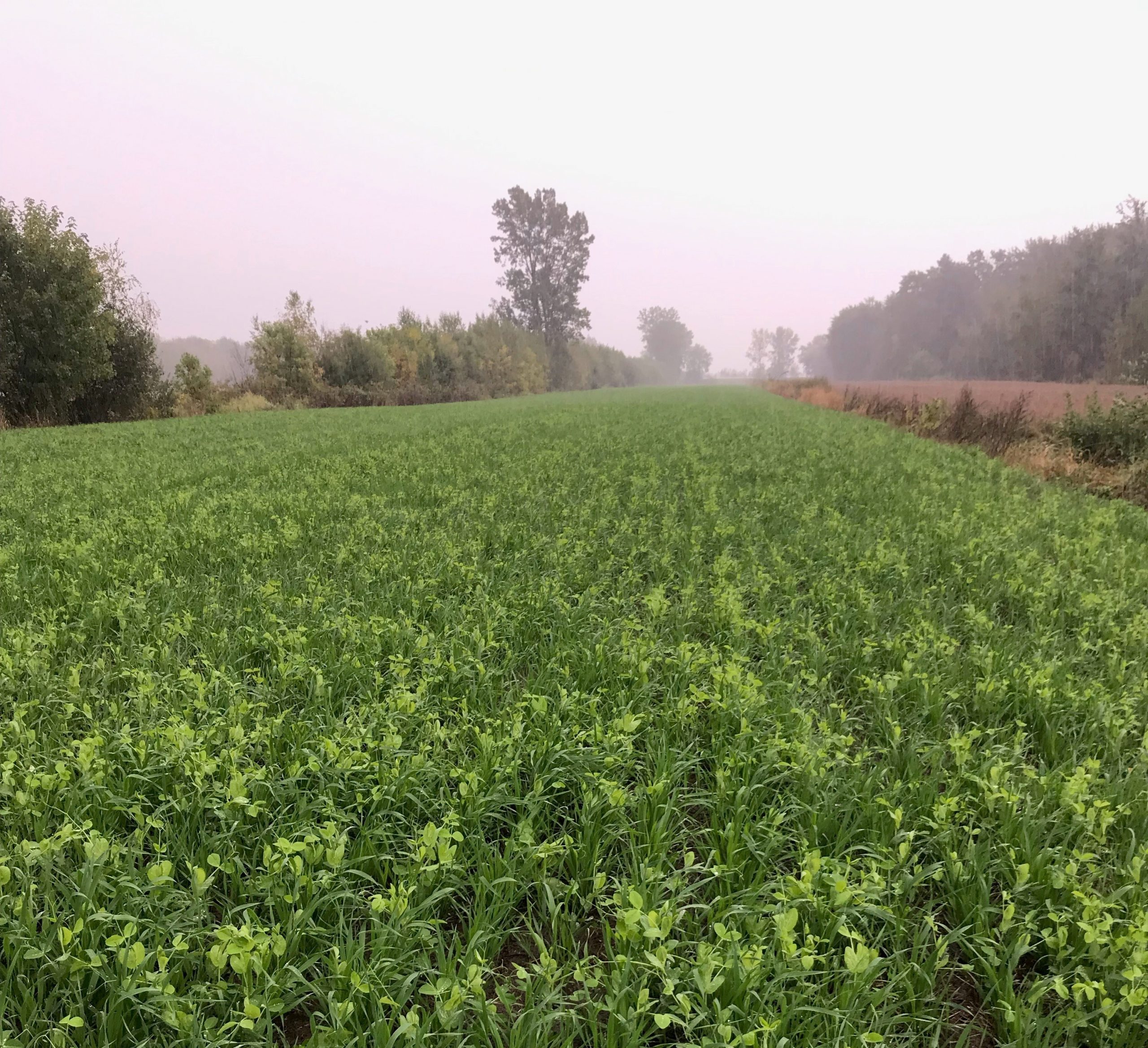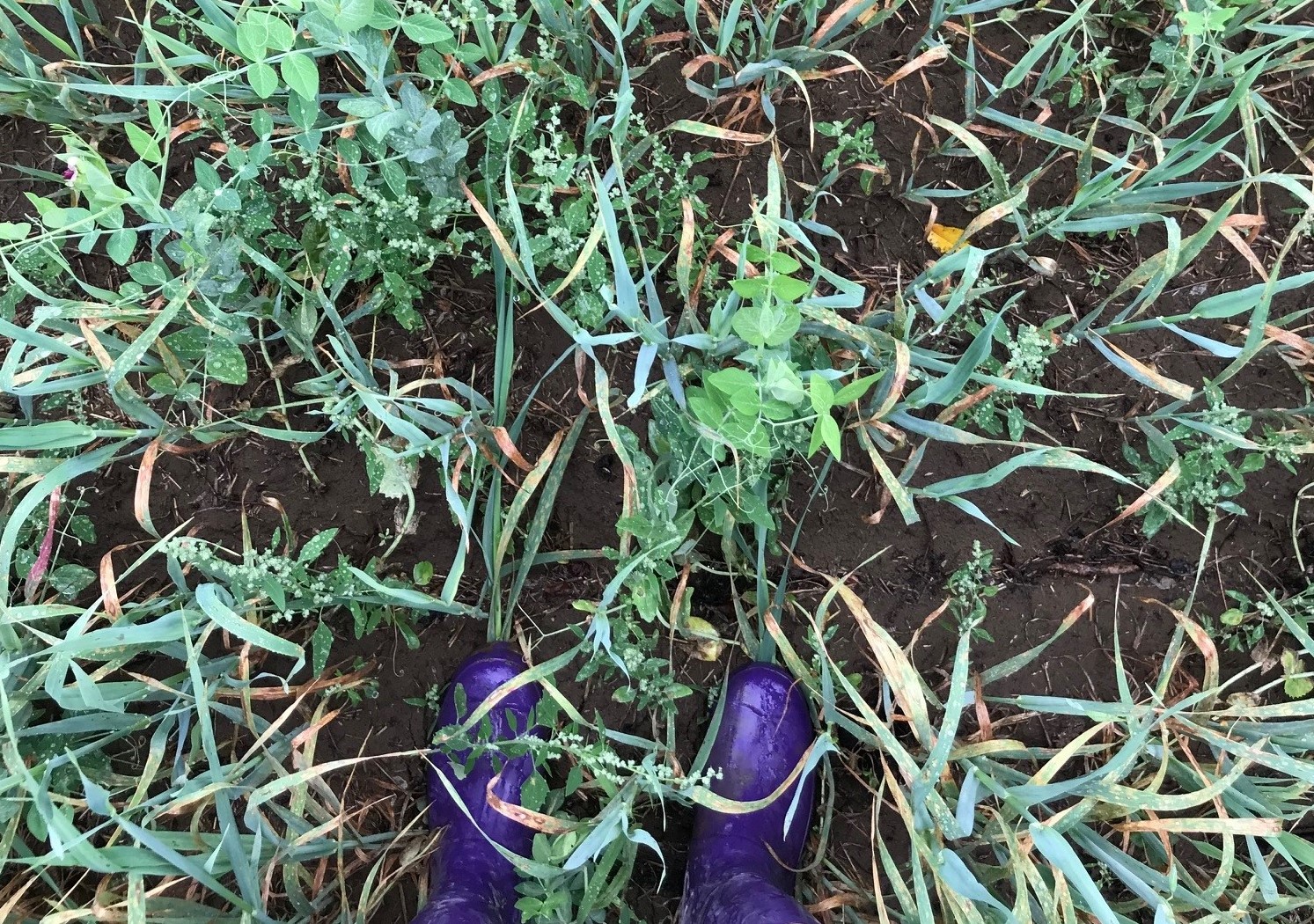
Agronomy

Cover crop and green manure

A cover crop can be planted between the rows of the main crop or after harvest.

What is it?

According to the Guide to Cover Crops in Field Crops, a cover crop is a crop planted “specifically to cover the soil in order to protect it from erosion and nutrient loss through leaching and runoff.”

Cover crops include:

  • Intercrops, which are planted between the rows of the main crop, and then left in the field
  • Cover crops, which are planted after the main crop is harvested, and then left in the field

Green manures are a subgroup of cover crops. They are sown before or after the main crop to increase the nutrient content for the subsequent crop.

What’s in it for me?

Planting a cover crop adds biomass to your fields, which helps to sequester carbon in the soil. It’s a practice that’s been proven to fight against climate change.

More generally, cover crops are useful for all bare soils, especially following a leveling operation. Specifically, these crops:

  • Improve soil structure as well as microorganism activity
  • Improve water infiltration, which reduces the effect of drought
  • Increase the yield of the main crops
  • Capture soil nutrients
  • Help control weeds
  • Contribute to biodiversity

Finally, the Union des producteurs agricoles’ Agrisolutions Climate program offers grants to facilitate the implementation of this practice.

If there is ONE good practice to implement, it’s cover crops!

Logiag’s advantage

Our experienced agrologists will guide you through all the steps of establishing your cover crops and help you choose the seeds that will meet your needs: increasing your nitrogen levels, stabilizing, or aerating your soil, controlling pests, etc.

With us, you will also get all the advice you need to properly prepare and terminate your cover crops to avoid any interference with your main crops.